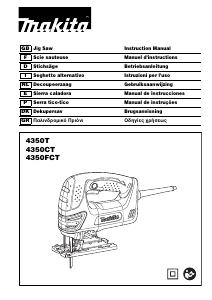
Manuale Makita DJV182ZJ Seghetto alternativo

Hai bisogno di un manuale per il tuo Makita DJV182ZJ Seghetto alternativo? Di seguito è possibile visualizzare e scaricare gratuitamente il manuale in PDF in italiano. Questo prodotto ha attualmente 4 domande frequenti, 0 commenti e ha 1 voto con una valutazione media del prodotto di 100/100. Se questo non è il manuale che desideri, contattaci.

Il tuo prodotto è difettoso e il manuale non fornisce alcuna soluzione? Rivolgiti a un Repair Café per il servizio di riparazione gratuita.

Manuale

Loading…

10
locked. Pull the blade lightly to make sure that the blade
does not fall off during operation.
CAUTION:
Do not open the tool opener excessively, or it may
cause tool damage. (Fig. 8)
To remove the blade, push the tool opener forward as far
as it will go. This allows the blade to be released.
NOTE:
Occasionally lubricate the roller.
Hex wrench storage (Fig. 9)
When not in use, store the hex wrench as shown in the
figure to keep it from being lost.
Cover plate (Fig. 10)
Use the cover plate when cutting decorative veneers,
plastics, etc. It protects sensitive or delicate surfaces from
damage. Fit it on the back of the tool base.
Anti-splintering device (Fig. 11)
For splinter-free cuts, the anti-splintering device can be
used. To install the anti-splintering device, move the tool
base all the way forward and fit it from the back of tool
base. When you use the cover plate, install the anti-
splintering device onto the cover plate.
CAUTION:
The anti-splintering device cannot be used when
making bevel cuts.
Dust extraction
The dust nozzle (optional accessory) is recommended to
perform clean cutting operations. (Fig. 12)
To attach the dust nozzle on the tool, insert the hook of
dust nozzle into the hole in the base. (Fig. 13)
To secure the dust nozzle, tighten the clamp screw at the
front of the dust nozzle.
The dust nozzle can be installed on either left or right side
of the base. (Fig. 14)
Then connect a Makita vacuum cleaner to the dust
nozzle.
OPERATION
CAUTION:
Always hold the base flush with the workpiece. Failure
to do so may cause blade breakage, resulting in a
serious injury.
NOTE:
If the tool is operated continuously until the battery
cartridge has discharged, allow the tool to rest for
15 minutes before proceeding with a fresh battery.
(Fig. 15)
Turn the tool on without the blade making any contact and
wait until the blade attains full speed. Then rest the base
flat on the workpiece and gently move the tool forward
along the previously marked cutting line.
When cutting curves, advance the tool very slowly.
Bevel cutting (Fig. 16)
CAUTION:
Always be sure that the tool is switched off and the
battery cartridge is removed before tilting the base.
With the base tilted, you can make bevel cuts at any angle
between 0° and 45° (left or right). (Fig. 17)
To tilt the base, loosen the bolt on the back of the base
with the hex wrench. Move the base so that the bolt is
positioned in the center of the bevel slot in the base.
(Fig. 18)
Tilt the base until the desired bevel angle is obtained. The
V-notch of the gear housing indicates the bevel angle by
graduations. Then tighten the bolt firmly to secure the
base.
Front flush cuts (Fig. 19)
Loosen the bolt on the back of the base with the hex
wrench and slide the base all the way back. Then tighten
the bolt to secure the base.
Cutouts
Cutouts can be made with either of two methods A or B.
A) Boring a starting hole: (Fig. 20)
For internal cutouts without a lead-in cut from an edge,
pre-drill a starting hole 12 mm or more in diameter.
Insert the blade into this hole to start your cut.
B) Plunge cutting: (Fig. 21)
You need not bore a starting hole or make a lead-in cut
if you carefully do as follows.
1. Tilt the tool up on the front edge of the base with the
blade point positioned just above the workpiece
surface.
2. Apply pressure to the tool so that the front edge of the
base will not move when you switch on the tool and
gently lower the back end of the tool slowly.
3. As the blade pierces the workpiece, slowly lower the
base of the tool down onto the workpiece surface.
4. Complete the cut in the normal manner.
Finishing edges (Fig. 22)
To trim edges or make dimensional adjustments, run the
blade lightly along the cut edges.
Metal cutting
Always use a suitable coolant (cutting oil) when cutting
metal. Failure to do so will cause significant blade wear.
The underside of the workpiece can be greased instead of
using a coolant.
Rip fence set (optional accessory)
CAUTION:
Always be sure that the tool is switched off and the
battery cartridge is removed before installing or
removing accessories.
1. Straight cuts (Fig. 23)
When repeatedly cutting widths of 160 mm or less, use of
the rip fence will assure fast, clean, straight cuts. (Fig. 24)
To install, insert the rip fence into the rectangular hole on
the side of the tool base with the fence guide facing down.
Slide the rip fence to the desired cutting width position,
then tighten the bolt to secure it.
Scarica il manuale in italiano (PDF, 7.42 MB)
(Rispetta l’ambiente e stampa questo manuale solo se è veramente necessario)

Loading…

Valutazione

Facci sapere che cosa pensi della Makita DJV182ZJ Seghetto alternativo valutando il prodotto. Vuoi condividere la tua esperienze con questo prodotto o porre una domanda? Ti preghiamo di lasciare un commento al fondo della pagina.
Sei soddisfatto di Makita DJV182ZJ Seghetto alternativo?
No
100%
0%
1 vota

Partecipa alla conversazione su questo prodotto

Qui puoi condividere cosa pensi di Makita DJV182ZJ Seghetto alternativo. Se hai una domanda, leggi prima attentamente il manuale. La richiesta di un manuale può essere effettuata utilizzando il nostro modulo di contatto.

Maggiori informazioni su questo manuale

Comprendiamo che sia bello avere un manuale cartaceo per i tuoi Makita DJV182ZJ Seghetto alternativo. Puoi sempre scaricare il manuale dal nostro sito web e stamparlo tu stesso. Se desideri avere un manuale originale, ti consigliamo di contattare Makita. Potrebbero essere in grado di fornire un manuale originale. Stai cercando il manuale del tuo Makita DJV182ZJ Seghetto alternativo in un'altra lingua? Scegli la tua lingua preferita sulla nostra home page e cerca il numero del modello per vedere se è disponibile.

Specifiche

Marca Makita
Modello DJV182ZJ
Categoria Seghe alternative
Tipo di file PDF
Dimensione del file 7.42 MB

Tutti i manuali per Makita Seghe alternative
Altri manuali di Seghe alternative

Domande frequenti su Makita DJV182ZJ Seghetto alternativo

Il nostro team di supporto cerca informazioni utili sul prodotto e risposte alle domande più frequenti. Se trovi un’inesattezza nelle nostre domande frequenti, ti preghiamo di farcelo sapere utilizzando il nostro modulo di contatto.

Per quali materiali posso usare il mio seghetto alternativo? Verificato

Grazie alle lame sostituibili, i seghetti possono essere utilizzati su quasi tutti i materiali. Generalmente vengono impiegati per segare curve e angoli.

È stato utile (483) Per saperne di più

Devo indossare una protezione per gli occhi quando uso un seghetto alternativo? Verificato

Sì. Piccole particelle possono sollevarsi durante il taglio. Quando questi colpiscono un occhio possono causare danni permanenti agli occhi. Ecco perché è sempre necessario indossare una protezione per gli occhi.

È stato utile (247) Per saperne di più

Posso riporre gli utensili elettrici in un capannone o in un garage? Verificato

In generale, puoi riporre gli utensili elettrici in un capannone o in un garage, anche se a volte lì gela. Tuttavia, per garantire la durata di vita dell'elettroutensile, è meglio conservarlo in un luogo asciutto e senza forti sbalzi di temperatura. In un capannone o in un garage, le differenze di temperatura possono causare la formazione di condensa, che può causare ruggine. Inoltre, gli strumenti alimentati a batteria durano meno e non si caricano bene a temperature molto basse. Per essere sicuri di come riporre il vostro elettroutensile, leggete sempre attentamente il manuale dell'utente.

È stato utile (90) Per saperne di più

Devo indossare protezioni per l'udito quando utilizzo un seghetto alternativo? Verificato

Si, dovresti. Sebbene la quantità di rumore prodotto da un seghetto alternativo possa variare a seconda della marca e del modello, l'esposizione a lungo termine a un forte rumore può causare danni permanenti all'udito. Ecco perché è una buona idea indossare protezioni per l'udito.

È stato utile (81) Per saperne di più
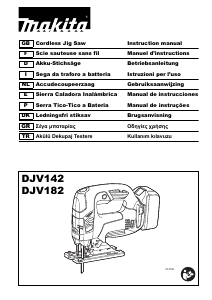
Manuale Makita DJV182ZJ Seghetto alternativo

Prodotti correlati

Categorie correlate

×
Download