Manuale Haier DW12-CBE6 I Lavastoviglie

Hai bisogno di un manuale per il tuo Haier DW12-CBE6 I Lavastoviglie? Di seguito è possibile visualizzare e scaricare gratuitamente il manuale in PDF in italiano. Questo prodotto attualmente ha 11 domande frequenti, 0 commenti e ha 0 voti. Se questo non è il manuale che desideri, contattaci.

Il tuo prodotto è difettoso e il manuale non fornisce alcuna soluzione? Rivolgiti a un Repair Café per il servizio di riparazione gratuita.

Manuale

Loading…
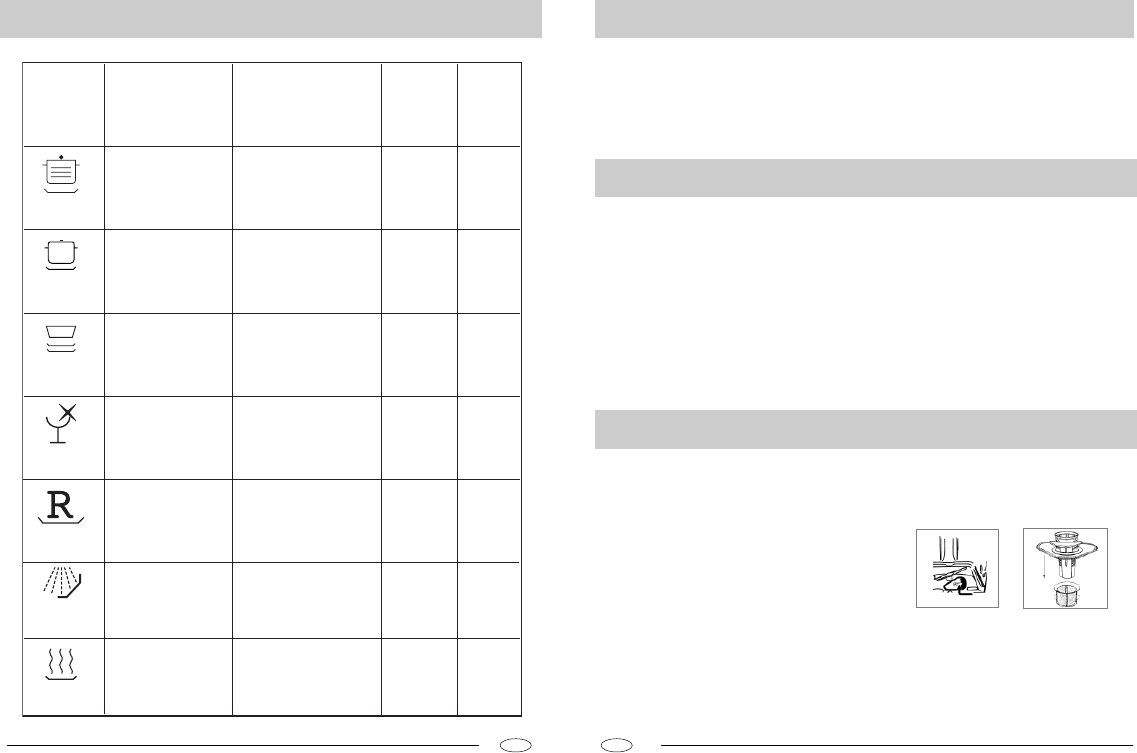
Wash Cycle TableWash Cycle Table
Wash Cycle Table
Energy Saving TipsEnergy Saving Tips
Energy Saving Tips
-It is important to try and run the dishwasher when it is fully
loaded in order to save on energy. In order to prevent odors
from forming and food from caking onto the dishes, you can run
the soak cycle.
-Choose the right wash cycle: the choice of cycle depends on
the type of dishware, cookware and utensils being washed and
how dirty they are.
-Use the right amount of detergent: if you use too much detergent,
the result will not be cleaner dishes, but, rather, a greater nega-
tive impact on the environment.
-There is no advantage in rinsing dishes, cookware and utensils
before placing them in the dishwasher.
How to keep Your Dishwasher in ShapeHow to keep Your Dishwasher in Shape
How to keep Your Dishwasher in Shape
After Every WashAfter Every Wash
After Every Wash
After every wash, turn off the water supply to the appliance and
leave the door slightly ajar so that moisture and odors are not
trapped inside.
Remove the plugRemove the plug
Remove the plug
Before cleaning or performing maintenance, always remove the
plug from the socket. Do not run risks.
No solvents or Abrasive Cleaning ProductsNo solvents or Abrasive Cleaning Products
No solvents or Abrasive Cleaning Products
To clean the exterior and rubber parts of the dishwasher, do not
use solvents or abrasive cleaning products. Rather, use only a
cloth and warm soapy water.
To remove spots or stains from the surface of the interior, use a
cloth dampened with water and a little white vinegar, or cleaning
product made specifically for dishwashers.
When You Go on HolidayWhen You Go on Holiday
When You Go on Holiday
When you go on holiday, it is recommended that you run a wash
cycle with the dishwasher empty and then remove the plug from
the socket, turn off the water supply and leave the door of the
appliance slightly ajar. This will help the seals last longer and
prevent odors from forming within the appliance.
Moving the ApplianceMoving the Appliance
Moving the Appliance
If the appliance must be moved, try to keep it in a vertical position.
If absolutely necessary, it can be positioned on its back.
SealsSeals
SealsSeals
Seals
One of the factors that cause odors to form in the dishwasher is
food that remains trapped in the seals. Periodic cleaning with a
damp sponge will prevent this from occurring.
Cleaning and Special MaintenanceCleaning and Special Maintenance
Cleaning and Special Maintenance
AA
AA
A
BB
BB
B
Filter AssemblyFilter Assembly
Filter Assembly
For best performance and results, the filter assembly must be
cleaned.
The filter efficiently removes food particles from the wash water,
allowing it to be recirculated during the cycle. For this reason, it
is a good idea to remove the larger food particles trapped in the
filter after each wash cycle by rinsing the "A" semi-circular filter
and cup under running water. To remove the filter assembly,
pull on the cup handle in an upward direction. The entire filter
assembly (made up of the "A" semicircular filter and the "B" fine
filter) should be cleaned at least once a month. To clean the
filter and the fine filter, use a cleaning brush. Then, reassemble
the filter parts as shown in the figures below and inset the entire
assembly in the dishwasher, positioning in its seat and pressing
downward.
The dishwasher must never be used without the filters. Improper
replacement of the filters may reduce performance of the appli-
ance and damage dishes and utensils.
Cleaning the Spray ArmsCleaning the Spray Arms
Cleaning the Spray Arms
It may happen that food particles become encrusted on the
sprayer arms and block the hole (see "Close up view [interior]" ,
letters D-F ). Check the sprayer arms periodically and clean them
when needed.
Cleaning the Water Inlet FilterCleaning the Water Inlet Filter
Cleaning the Water Inlet Filter
Periodically clean the water inlet filter located on the outlet of the
water supply tap.
After turning off the water tap, unscrew the end of the water sup-
ply hose, remove the filter and clean it carefully under running
water. Then, return the filter to its place and tighten the water
supply hose back into position.
.8..8.
.8..8.
.8.
.7..7.
.7..7.
.7.
GBGB
GBGB
GB
GBGB
GBGB
GB
CycleCycle
CycleCycle
Cycle
CycleCycle
CycleCycle
Cycle
SelectionSelection
SelectionSelection
Selection
InformationInformation
Information
Description of CycleDescription of Cycle
Description of Cycle
Normal Wash
Heavy Duty
Light Wash
(IEC-EN50242)
Glassware
Rapid Wash
Soak
(5)
Normal dirty dishes,
pots and pans. Stan-
dard daily cycle.
Very dirty dishes,
pots and pans. (Not
to be used with deli-
cate items)
Normal dirty dishes,
pots and pans without
dried on residue.
Economic, fast cycle to
be used for items which
are sensitive to higher.
Run immediately after
dishes are used.
Economic, fast cycle to
be used to on not very
dirty dishes right after
they are used. No dry-
ing cycle.
Pre-wash of dishes,
pots and pans while
waiting for the load to
be completed after the
subsequent meal.
Pre-wash with hot water.
Extended wash at 70 .
Rinses with cold water.
Rinse with hot water.
Drying.
Prewash use cold water.
Extended wash at 55 .
Rinse with cold water.
Rinse with hot water.
Drying.
Wash at 60 .
Rinse with warm water.
Hot rinse.
Drying.
Short wash at 40 .
Cold rinse.
Short cold wash to prevent
food residue from drying on
the dishes .
30g
30g
15g
15g
Pre-wash with cold water.
Extended wash at 50 .
Rinse with cold water.
Rinse with hot water.
Drying.
5g+25g
DetergentDetergent
DetergentDetergent
Detergent
Rinse AidRinse Aid
Rinse AidRinse Aid
Rinse Aid
The cycle of heat wash-
ing and dry tableware.
Heat washing.
Heat wash
Scarica il manuale in italiano (PDF, 1.54 MB)
(Rispetta l’ambiente e stampa questo manuale solo se è veramente necessario)

Loading…

Valutazione

Facci sapere che cosa pensi della Haier DW12-CBE6 I Lavastoviglie valutando il prodotto. Vuoi condividere la tua esperienze con questo prodotto o porre una domanda? Ti preghiamo di lasciare un commento al fondo della pagina.
Sei soddisfatto di Haier DW12-CBE6 I Lavastoviglie?
No
Valuta per primo questo prodotto
0 voti

Partecipa alla conversazione su questo prodotto

Qui puoi condividere cosa pensi di Haier DW12-CBE6 I Lavastoviglie. Se hai una domanda, leggi prima attentamente il manuale. La richiesta di un manuale può essere effettuata utilizzando il nostro modulo di contatto.

Maggiori informazioni su questo manuale

Comprendiamo che sia bello avere un manuale cartaceo per i tuoi Haier DW12-CBE6 I Lavastoviglie. Puoi sempre scaricare il manuale dal nostro sito web e stamparlo tu stesso. Se desideri avere un manuale originale, ti consigliamo di contattare Haier. Potrebbero essere in grado di fornire un manuale originale. Stai cercando il manuale del tuo Haier DW12-CBE6 I Lavastoviglie in un'altra lingua? Scegli la tua lingua preferita sulla nostra home page e cerca il numero del modello per vedere se è disponibile.

Specifiche

Marca Haier
Modello DW12-CBE6 I
Categoria Lavastoviglii
Tipo di file PDF
Dimensione del file 1.54 MB

Tutti i manuali per Haier Lavastoviglii
Altri manuali di Lavastoviglii

Domande frequenti su Haier DW12-CBE6 I Lavastoviglie

Il nostro team di supporto cerca informazioni utili sul prodotto e risposte alle domande più frequenti. Se trovi un’inesattezza nelle nostre domande frequenti, ti preghiamo di farcelo sapere utilizzando il nostro modulo di contatto.

Dopo che la mia lavastoviglie ha terminato il ciclo di lavaggio, il contenitore delle pastiglie non si è aperto. Come mai? Verificato

Questo problema è spesso dovuto ai piatti che bloccano il contenitore, pertanto è necessario eseguire un controllo prima di avviare la lavastoviglie.

È stato utile (8381) Per saperne di più

Perché la lavastoviglie non scalda più l’acqua? Verificato

Il dispositivo di riscaldamento potrebbe essere difettoso e andrebbe sostituito. In caso di dubbi, si prega di contattare il produttore.

È stato utile (8170) Per saperne di più

Posso usare il sale normale nella mia lavastoviglie? Verificato

No, il sale normale può contenere sostanze che possono danneggiare l'elettrodomestico.

È stato utile (3478) Per saperne di più

Devo sciacquare i piatti prima di metterli in lavastoviglie? Verificato

Non è necessario sciacquare i piatti, ma bisogna rimuovere i resti grossi e duri, nonché i residui di grasso che potrebbero far intasare con il tempo lo scarico della lavastoviglie.

È stato utile (1432) Per saperne di più

Posso aprire la lavastoviglie mentre sta effettuando un ciclo di lavaggio? Verificato

La maggior parte delle lavastoviglie sono dotate di un sistema di interruzione dell’acqua, che arresta immediatamente il programma quando si apre lo sportello e che impedisce all’acqua di fuoriuscire. In alcuni modelli, questa pratica potrebbe provocare problemi nel tempo. In caso di lavastoviglie ad incasso, è possibile che l’apertura frequente dello sportello mentre è in azione possa danneggiare i mobili circostanti a causa del vapore che fuoriesce.

È stato utile (1218) Per saperne di più

Devo aprire la lavastoviglie alla fine del ciclo per far asciugare prima i piatti? Verificato

Dipende dal tipo di lavastoviglie e dalla sua posizione. Alcune lavastoviglie sono dotate di una funzione di asciugatura al termine del ciclo di lavaggio. In questo caso, aprire lo sportello della lavastoviglie non serve a niente. In caso di lavastoviglie ad incasso, è possibile che l’apertura frequente dello sportello mentre è in azione possa danneggiare i mobili circostanti a causa del vapore che fuoriesce.

È stato utile (973) Per saperne di più

Una volta terminato il ciclo di lavaggio della lavastoviglie, i piatti di plastica sono ancora bagnati mentre il resto è asciutto. A cosa può essere dovuto? Verificato

La plastica non è un buon conduttore di calore e consente ai prodotti di raffreddarsi velocemente. L’umidità rimanente evapora quindi molto meno rispetto alla ceramica o ai metalli.

È stato utile (870) Per saperne di più

Posso collegare la lavastoviglie a una prolunga? Verificato

Gli elettrodomestici che necessitano di molta energia, come le lavastoviglie, non possono essere collegati con una prolunga. Verificare il consumo energetico della lavastoviglie, indicato in Watt, e controllare che la prolunga possa reggerlo. Esistono delle prolunghe con cavi più spessi che sono costruiti per reggere elettrodomestici più potenti.

È stato utile (817) Per saperne di più

Posso mettere pentole con teflon in lavastoviglie? Verificato

Si, puoi. Tuttavia, la padella si consumerà più velocemente rispetto a quando viene pulita a mano. Quando si pulisce a mano una padella con teflon, non utilizzare mai una paglietta ma utilizzare una spugna o un panno morbido.

È stato utile (814) Per saperne di più

Posso mettere oggetti in legno come spatole e taglieri in lavastoviglie? Verificato

No. Gli oggetti in legno possono danneggiarsi o deformarsi in lavastoviglie. Inoltre, le fibre di legno che si liberano potrebbero danneggiare la lavastoviglie. I taglieri in legno sono spesso realizzati con colla che può staccarsi dopo essere stata lavata più volte in lavastoviglie.

È stato utile (813) Per saperne di più

È un problema avere graffi sul metallo all'interno della lavastoviglie? Verificato

L'interno della maggior parte delle lavastoviglie è realizzato in acciaio inossidabile e non è soggetto a graffi.

È stato utile (811) Per saperne di più
Manuale Haier DW12-CBE6 I Lavastoviglie

Prodotti correlati

Categorie correlate

×
Download